Category Archives: Uncategorized

Feeding Havanese Raw Liver

Can I feed raw liver to my Havanese?

Well, it turns out that raw, grass-fed liver may very well be one of the most nutrient dense super-foods available for K-9 consumption.
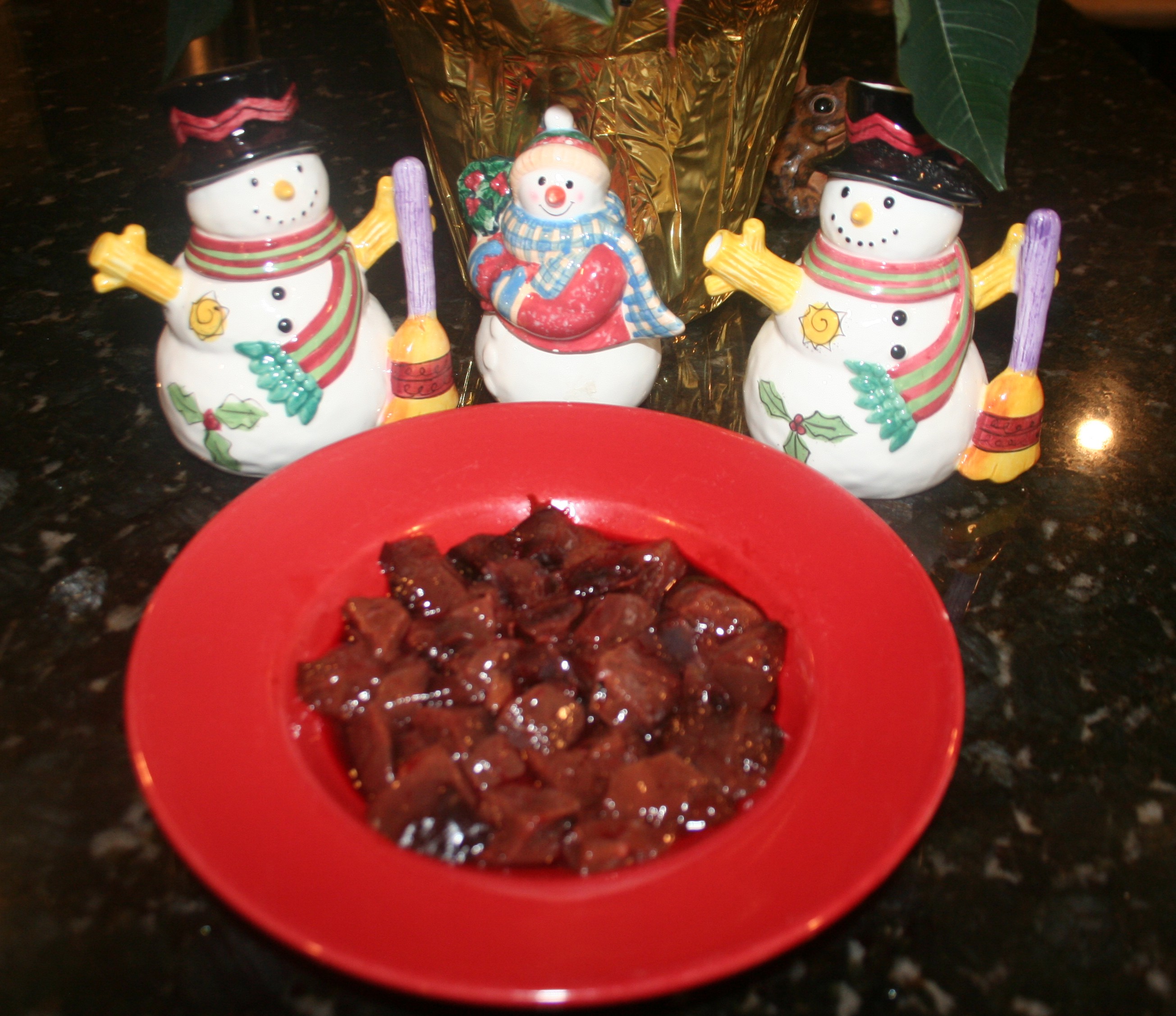
Feeding Havanese Dogs Raw Liver

Liver contains lots of extremely high quality protein as well as a plethora of nutrients including large amounts of vitamin A. It also contains vitamins C, D, E, K, vitamins B1, B2, B3, B5, that hard-to-find B12, biotin, omega-3 and omega-6 fatty acids, and is a tremendous source of iron as well as zink, selenium, and manganese.  If consumed raw the liver also has active digestive enzymes which aid in food digestion and absorption.

These nutrients are important for almost all functions in the dog’s body including maintaining a strong immune system and proper brain and heart function.  Havanese Dog breeders may consider liver as a supplement for its positive effects on the K-9 reproductive system and blood hemoglobin.

So what about the Havanese? Isn’t it a domesticated dog that requires kibble or canned food?  Won’t raw meat mess digestion up?

My experience with Havanese has answered that question with both a yes and no.  The Havanese is a domesticated dog that can have a sensitive stomach.  Table scraps and unfamiliar foods can be dangerous causing vomiting and diarrhea leading to dehydration and sometimes aspiration.  I have personally known Havanese that have died from eating too much of the wrong thing from the table.

That being said, Havanese are still dogs just like wolves, foxes, and coyotes and are capable of eating raw foods as well.  The domesticated Havanese has developed a micro-ecology (friendly micro-organisms that aid in digestion) in the gut that is used to digesting kibble or other processed canned foods.  When introducing too much of a new food in too short a period of time it effectively “shocks” the dogs digestive system with substances that the gut is not used to digesting and the dog’s body rejects the food resulting in vomiting and diarrhea.

When introducing raw, cooked, or dehydrated liver to your Havanese it is wise to start very slowly with a very small chunk about the size of a dime. If your dog does well then very slowly increase the portion over a period of a few weeks to the desired amount.  Make sure to monitor for any vomiting or loose stools.  If you encounter any, take a break for a day or two and try again later after the dog’s system has normalized. Going slow allows the dog’s gut micro-organisms time to evolve and adapt to digesting the new food.

What kind of liver should I get and where do I get it?

Something to take into account when feeding raw foods of any kind to your dog is the source and the quality.  Beef liver that is from a cow fed with genetically modified corn and soy and kept in confinement housing will have a very different nutritional profile than one that is grass-fed with plenty of room to roam.

Whenever possible we try to purchase our organ meats from local farmers who raise grass-fed cows or sheep.  Pastured chicken livers are also an excellent choice.  Not only is grass-fed liver much more nutritious, it also has considerably fewer toxins, and is usually much cleaner, not having the high levels of harmful bacteria that have been associated with raw meat scares.

If raw liver makes you a bit squeamish then cooked or dehydrated liver is a close second-best.  You will still want to check your source on all products to make sure it is from grass-fed or pastured animals.

How much liver should I feed to my Havanese?

The general consensus is that liver can comprise up to 5% of the dog’s diet.  I give a few small chunks a day to each of my dogs. Because liver is so high in vitamin A there is some concern that dogs may get too much.  The fear is that over a period of time, too much accumulating vitamin A may result in vitamin A toxicity.  Sticking to the 5% rule should eliminate this concern.

Housetraining Havanese

Now that you have brought your new baby home, teaching him where to do his business is of utmost importance. You have several options available. The most common housetraining methods are going outside, crate training, wee-wee pads, newspapers, and doggie litter boxes. My personal favorite is to take the puppy outside in addition to placing wee-wee pads all over the house. When you combine these two methods you don’t have to worry as much about inside accidents. The pads are there just in case.

BASIC HOUSE TRAINING FOR OUTSIDE

If you are going to train your Havanese puppy to go outside it is very important to get off to a good start. Your goal is to prevent accidents right from the start. It is important to watch your puppy carefully at first and to be consistent. Just tell yourself that housetraining your new baby is your job and that you are going to focus on it for the first couple of weeks.

It is helpful if you can get your puppy on a regular schedule and feed him around the same time every day.  This helps the puppy’s digestive system to get regulated and makes training easier. The two most crucial times to take your puppy out are immediately after he wakes up and immediately after he has finished eating. It is good to take him to the same spot every time. Also, be careful to watch for signs that your puppy may need to “go” such as squatting, circling, or sniffing. If you see these signs, pick your puppy up and take him out to his “potty” spot immediately. When he has done his business make sure to praise him or give him a treat. Havanese love to please and the positive reinforcement will make housetraining easier.

A Havanese puppy can “hold it” for about one hour for every month that it is old. This means that if you have a two-month old puppy, he should be able to “hold it” for about two hours. This works well when your puppy is in his crate but when he is running around the house it is best to try to take him out about every hour or so at first. It is better to err on the side of taking him out too often than not often enough.

It is important to know that Havanese puppies are very playful and enjoy going outside. They tend to run around, explore, and play before they do their business. It is almost as if they have to work themselves into the mood. Also, some Havanese will go more than one time.  Be sure that you stay outside long enough to give your puppy plenty of time to do his business and make sure he is finished before bringing him back into the house. It is a common mistake of new Havanese owners to assume that since their puppy is playing that he doesn’t have to go. They then take the puppy inside only to have him go shortly after.

To make sleeping through the night easier, you can pick up your puppy’s water bowl a couple of hours or so before bedtime and take him out right before you go to bed.

CRATE TRAINING HAVANESE

Crate training has been known to be a very effective. The principle behind crate training is that dogs usually do not like to do their business in their own “space.” There are exceptions to this rule but they are rare.

When choosing a crate, I would recommend getting a crate that will be big enough for your Havanese when it is full grown. However, to crate train your puppy all you need is a crate with enough room for your puppy to stand, to turn around, and to lie down comfortably. You do not want enough room for your puppy to be able to go to the back of the crate to do his business. Some crates come with dividers, others do not. If your crate does not have a divider just find something like a paint can, a small box, or something else to put in the back of your crate to make it the correct size for your puppy. Once your puppy has become accustomed to not doing his business in his crate you can take the divider out.

When you put your puppy in the crate it is a good idea to put his “blankie” and some toys in there with him. Havanese are bred to be companions and do not like to be left alone. Be sure to put the crate in the same room with you so that he feels like he is still a part of the family. You can move the crate around with you when you change rooms. It is also a good idea to put the crate by your bed at night so that he will feel more secure.

At first, when you get your puppy out of the crate, pick him up and take him outside immediately. Do not let him walk on his own as he might squat and go to the bathroom as soon as he is out of the crate. With time he will learn that the routine is to get out of the crate and then go potty outside.

WHAT DO I DO WHEN I HAVE TO LEAVE THE HOUSE?

When leaving the house you can place your puppy in his crate. This usually works well unless you have to be gone for a longer period of time than your puppy can “hold it.” When this is the case, I have found that the easiest thing to do is to find a small area such as a laundry room, a small bathroom, or a section of the house that you can block off with a baby gate.

First, place the crate in that area and completely cover the floor with wee-wee pads or newspapers. Second, place the puppy’s bed, blankie, toys, and fresh water in the room with him. The puppy will usually choose an area of the room to use as his place of business. When you see the space he has chosen you can pick up the unused wee-wee pads and use them later. This way your puppy has a comfortable place to sleep, plenty of toys to keep him busy, and he doesn’t have to experience the discomfort of having to “hold it” until you get home. You can then enjoy your time away from home without having to worry about being gone too long and coming home to find an accident in the crate with your puppy.

Havanese Dewclaw Removal

HAVANESE DEWCLAW REMOVAL –

Is this practice safe for the health of your dog?

  Should the dewclaws be removed? This is a question that is being asked with more frequency.  The dewclaw is the “fifth” little claw that grows higher on the leg than the others.  Unlike the other four claws that have constant contact with the ground this claw sometimes seems to remain off the ground when the dog is standing.  It does, however, make contact with the ground while the dog is running.

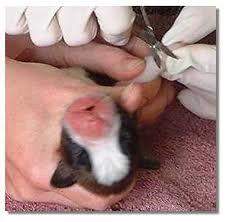
Some Havanese breeders will have a vet remove the dewclaws from their puppies when they are just a few days old as part of their general health procedure. These breeders and their social circles have tried to label this as a healthy and responsible practice.

havanese puppy dew claw removal of puppies

The reason for this is that dewclaw removal has been perceived by some to offer both health and safety benefits for the dogs. Dewclaws have been seen as a weak claw that can sometimes become loose and rip partway off or catch on objects while the dog is running.  The logic is that the removal of the dewclaws eliminates these hazards.  There is still a large and very legitimate debate, however, as to the validity of the claim that dewclaw removal is healthy for your Havanese.

As dog breeders of over 20 years we have personally never had any negative issue arise from dewclaws.  It is our opinion that the dewclaws should not be removed as a general practice.  There are always situations where the removal of the dewclaws may be necessary for particular dogs but as a universal practice it may ultimately cause more harm than good.

In fact, new research is showing that by removing the dewclaws you may be causing long term harm to your Havanese and promoting health problems such as joint laxity and arthritis.

“The following excerpt from Dr. Zink is very applicable to the Havanese breed since Havanese are very well known for their “run like crazy” activity and are commonly used in agility competitions …

“….with so many carpal bones that don’t tightly interlock with the adjacent bones the ligaments of this joint can be easily stretched and even torn when torque (twisting) is applied to the leg. The dewclaws have the important function of reducing the torque that is applied to the front legs, especially when dogs are turning at a canter (the main gait speed in agility) In the canter, there is a moment during each stride when the dog’s accessory carpal pad (on the back of the carpus) of the lead front leg touches the ground and the rear legs and the other front leg swing forward to prepare for the next stride. At this point, the dewclaw is in contact with the ground and if the dog turns, the dewclaw can dig in for extra traction to prevent unnecessary torque on the front leg. Without the gripping action of the dog’s “thumbs” there is more stress on the ligaments of the carpus. This may cause the ligaments to stretch and tear over time, resulting in joint laxity and ultimately, in arthritis” (excerpt of “Dogs in Canada” article by Chris Zink DVM.,Ph.D) “