New puppy kit: what do i need to buy?

As a future puppy owner you are likely wondering what you will need to have when your new baby comes home. There are so many puppy things being marketed out there. Which ones will my puppy like? What is necessary and what isn’t? Where is the best place to get what I need? Who has the best prices?

We have tried to answer these questions below. The answers are written with the Havanese in mind but are really applicable to any breed of dog one gets.

Here is a list of the items we recommend for new puppy owners as well as helpful links to the items so you can see what they look like and purchase them if you decide to buy online. Be sure to scroll to the end to find out how to get the best price on everything you need.

  • Puppy Food – There are a lot of good dog foods out there but the one we recommend is Castor and Pollux Organix Puppy food. This is the food we feed our puppies. Organix has top quality nutritious ingredients and does a good job at eliminating the artificial preservatives, flavors, and colors that are so commonly found in dry dog foods which can negatively effect your dogs health in the long term. Another thing we like about this food is that the pieces are small enough that puppies can easily eat it dry without needing to wet it down to soften it while their molars are coming in.

You can find it here:

Castor & Pollux Organix Healthy Grains Organic Puppy Recipe Dry Dog Food, 10-lb bag

  • Collar/Harness and Leash – If you plan on taking your puppy out and about this is a must have. Havanese are very good about listening and coming when called but there are a lot of places and settings where the safest thing to do is to have your baby on a leash. The options here are almost limitless. Some people prefer a harness over a collar as it puts less pressure on your puppies neck. Almost any small collar will do for a puppy. Here are a couple links to the type of leash and harness we like:

Leash:

Flexi Comfort Nylon Tape Retractable Dog Leash, Grey, X-Small: 10-ft long

Harness:

Li’l Pals Comfort Wrap Step In Back Clip Dog Harness, Neon Pink, 8 to 14-in chest

  • Dog Bed/ Crate – Dogs are den animals. They like having a small cozy personal space they can curl up in and sleep at night or retreat to rest in during the day. A wire crate with a pillow liner is a great option. When choosing a crate size it’s important to keep your house training as well as the eventual adult size of the puppy in mind. If the interior space in a crate is too large a new puppy might decide that one half of it is OK to use as a rest room. A good size for a crate is one which the puppy can stand up, turn around, and lay down in comfortably. A good crate hack for a growing puppy is to get a crate large enough for an adult dog with a removable wire divider to adjust the interior space as your puppy grows. If your crate you have doesn’t have a divider you can always put a paint can or something else that the puppy isn’t able to chew in the back of the crate to lessen the space while it is still small.

Here is a great crate option that comes with a liner and divider:

Frisco Fold & Carry Single Door Collapsible Wire Dog Crate, 24 inch & Frisco Quilted Dog Crate Mat, Ivory, 24-in

  • Dog Treats – Havanese can have sensitive stomachs and some dog treats as well as table scraps may cause vomiting or loose stools. We like using Redbarn Naturals Dog Food Rolls in place of traditional dog treats. Havanese LOVE them and they’re easy on the stomach. Redbarn has good ingredients, including liver, which is very good for your dog. Just don’t go too overboard giving your puppy huge amounts at once. Its important to note that Redbarn makes actual dog treats as well but from our experience your puppy will like the roll just as much as the treats and you can get 4 lbs of roll for roughly the same price as 9 oz of treats.

You can find it here:

Redbarn Naturals Beef Recipe Dog Food Roll, 4-lb roll

  • Chew Toys – Havanese are not chewers but all puppies of all dog breeds chew while they are teething. As far as I know there are no exceptions. Human babies do the same thing for that matter. The best thing to do is to have some dedicated chew toys or bones that are theirs for the chewing while you puppy is growing. These help your puppies teeth development as well as help them keep their teeth clean and off of the things you DON’T want them to chew on.

Here are a few options:

Chew toys for puppies

  • Brush – Yes, you will need a brush. If you keep your puppy in a short coat a brushing usually takes less than 5 minutes. If you decided to keep your Havanese in full coat you will spend a little bit longer We recommend brushing out as needed (usually about once per week).

Here is a good brush to use:

Safari Wire Pin Brush for Dogs, Large

  • Other Things – If you want to go completely ham when getting set up here are some potentially useful and fun suggestions!

Doggy gates can be helpful when you want to keep your puppy in a certain area. Here is one example:

Regalo Easy Step Extra Wide Dog Gate, 49-in, Black

Puppy shirts and sweaters can be cute and downright handy in the cold when you want to be outside:

Puppy clothes, shirts, and sweaters

A good Havanese Book can be helpful in getting familiar with the breed and with basic care. This is a good one sold on Amazon that features one of our family’s dogs.

Click here to see the book we recommend

So how do I get the best price on what I need?

HERE’S THE “TRICK:” Chewy.com has a deal where you get 30% off your first autoship order plus Free 1-3 Day Shipping on orders over $49.

Chewy’s prices are already very competitive compared to other stores like Amazon and Petsmart but when you add this 30% discount on top of an already good price it gives you an unbeatable deal! We recommend that you place everything in your autoship cart, place your 1st autoship order getting 30% off everything you need, then cancelling your autoship online or by phone. You can also keep it going if you chose with just the items you will regularly need like your puppy food and dog treats. There you have it. New puppy owner life hack!

Click the link below for the discount:

Save 30% on your first Autoship Order with Chewy!

Is It ok To Get 2 Havanese Puppies?

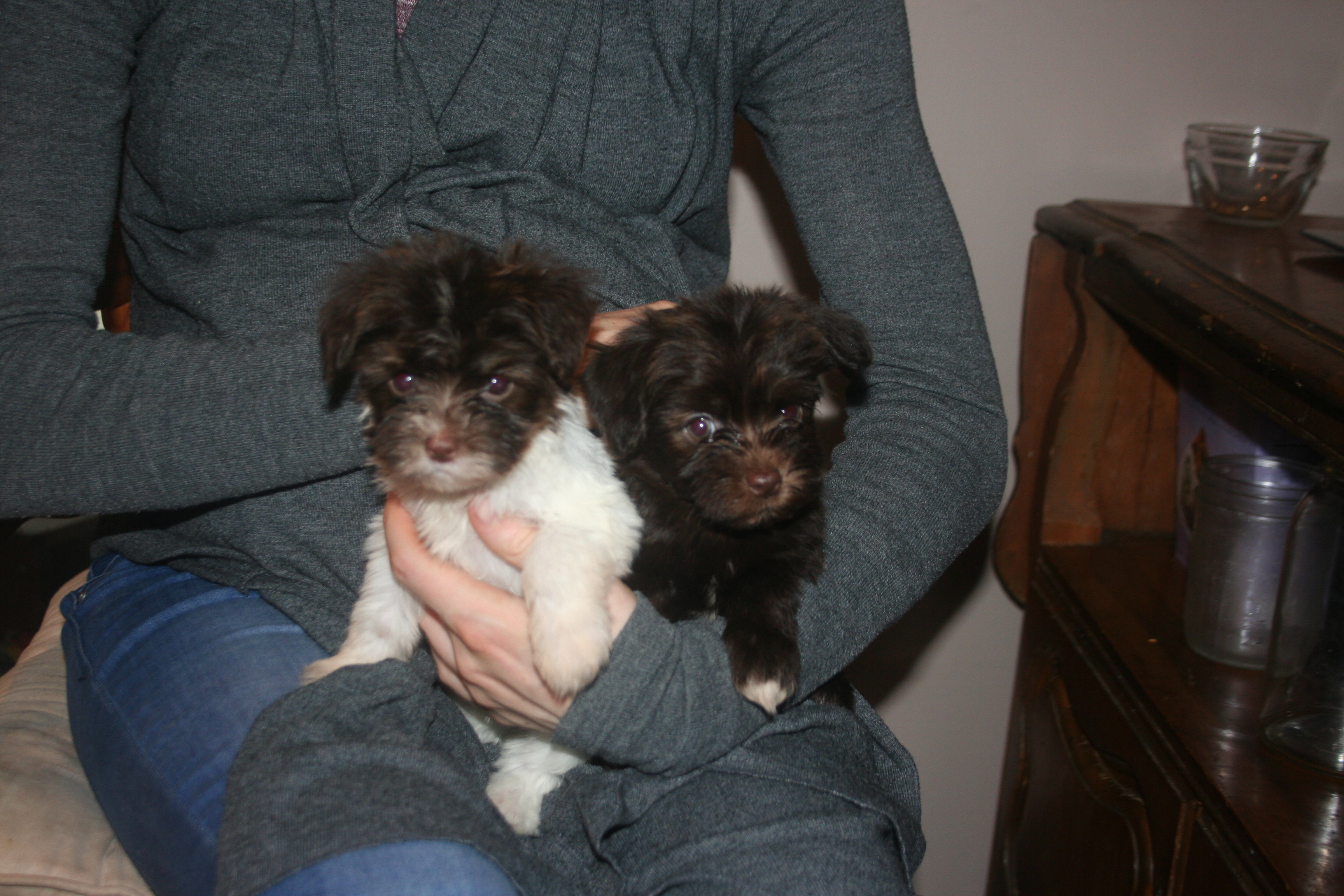
Our family has been breeding dogs in the Havanese family for over 20 years. There have been many times that we have kept two puppies at the same time and numerous times that we have sold two puppies at the same time through the years. In fact, Havanese are bred to be companion dogs, and as such, they need a companion, so we will not sell only one Havanese to a situation where everyone in the family leaves to go to work and school and the puppy will be left home alone during the day. I can say that I highly recommend getting two at the same time and have never personally had anything other than positive experiences from doing so, and have heard nothing but positive testimonies from people who have bought two of our puppies at the same time. That being said, there are articles on the internet which discourage getting two puppies at the same time and many of these concerns can be valid depending on the breed.

One objection with getting two dogs is the concern that the puppies will not get the socialization they need because of the owners split attention. We have never had to split out attention when we have had two puppies because both puppies will be in our lap at the same time or one of us will have a puppy in our lap and another of us will have the other puppy in their lap, thus both puppies are getting plenty of snuggle time.

Chocolate Havanese Puppy

Another objection is that dogs are pack animals and will develop a pack mentality. While it is true that all dogs are pack animals, how that is displayed differs between breeds.  For example: German Shepherds are bred for protection and guard duty. They are more closely related to the wolf family and are more likely to fight one another for dominance or to gang up on whatever dog or human they find themselves in conflict with.  If I were getting a German Shepherd I would be very careful to examine the lines and temperament of the Shepherds as well as the environment I would be bringing the dogs into before considering getting two.

Havanese, because of their temperament, get along much better with each other than many other dog breeds.  The issue of dominance is not really an issue and aggression just isn’t in their nature. Havanese love each other and enjoy being together. Havanese are bred to sit in your lap and that is exactly what they will want to do. We have a lot of Havanese at our house and ALL of our dogs will pile on top of us (and each other) when we are on the sofa watching TV.

One of the biggest objections that I have read is “litter-mate syndrome” in which two litter-mates, who have been together since birth, become bonded to each other, develop separation anxiety or other unpleasant behaviors in relation to each other, and fail to bond with their human owner because of their strong bond with each other.  This can be an issue for “one owner dogs” because of their tendency to pick only one being and bond to it. Because of the loving temperament of  Havanese, I can not say that I have personally seen this with our dogs.  Havanese will bond to each other, but that in no way takes away from the bond that they have with their people. Because of their capacity for love they have no problem bonding with multiple people and animals at the same time.  As long as a Havanese has a person or another social dog to be with, they will have what they need to maintain healthy emotional stability. It is impossible for people to be with their dogs 100% of the time and having two Havanese guarantees round the clock companionship.

How Do Emotions Effect Havanese Behavior?

Havanese are highly intelligent dogs who love their people and are very eager to please.  One aspect of their temperament that makes them so easy to live with is their sensitivity to the emotional state of those around them.  Havanese have a high degree of emotional intelligence and are aware of what their people are feeling.  This, combined with their desire to please, creates a dog who is ready and willing to do whatever you are ready and willing to do.  If you are happy, your dog is happy.  If you are sad, your dog tries to comfort you.  If you want to play, your dog is ready.  If you want to chill and relax, your dog is more than ready for some lap time.

Black and white Havanese puppy licking face

This temperament trait is one big reason many people decide on a Havanese as their breed of choice.  They are therapy dogs and many people purchase them to help them move past the loss of a pet or loved one, to be a companion in times of loneliness, or to help them heal from something else.

Most positive traits, however, also have their negative counterpart.  With the Havanese, this shows up when there are long-term or extreme negative emotions displayed in the dog’s home environment.  Havanese dog owners need to be aware that anger, bitterness, long-term sadness, excessive stress or panic, and other negative emotions can have negative effects on the personality or behavior of your Havanese, and in some cases, can cause your havanese to become physically ill.  Havanese will use their emotional energy to try to help you feel better and doing this long-term can drain your dog of its emotional resources resulting in negative emotions or behaviors from your dog.

As Havanese dog breeders we have had several cases where people have called us with concerns over negative personality displays or behaviors in their dog that are uncharacteristic of the Havanese breed.  After talking with the owners we usually find that there is something else that has happened in the home that is putting a high degree of emotional stress on their dog.  For example, lots of anger in a household can create a skittish Havanese.  If the dog’s owner is very stressed or upset for a sustained length of time you might find a dog who becomes depressed and lethargic until the circumstances change.  These are just two examples and are by no means exhaustive.

The biggest reason we find for negative personality or behavior changes in a Havanese is when the owner has changing circumstances in his or her life and begins leaving the dog alone regularly for long periods of time.  Havanese are companion dogs and have a need for another social being whether that be a human or another social dog or animal.


Havanese and children

Havanese owners need to think of their dog kind of like a human child.  If there is stress in the home it will upset the child. Children are good at bouncing back under normal circumstances but in an environment with regular and sustained stress the child may suffer in personality and behavior.

With this being said, people should understand that Havanese are very good at rolling with life with its ups and downs and most people have absolutely nothing to worry about when it comes to life’s stresses and the personality of their dog.  They roll with stress and recover very quickly.  They are amazing therapy dogs and help people heal.  I am writing this so that Havanese owners can be aware of this trait in their Havanese so that in cases of extreme or prolonged stress they can be sensitive to the emotional state of their dog.

10 Reasons To Get A Havanese Puppy

10. Havanese are Not hyper.

Any puppy will have more energy and be more rambunctious than an adult but a good quality Havanese dog should have a “chill” temperament and will not be bouncing off the walls.

9. Havanese are Not “snappy.”

A quality Havanese puppy or adult should never be aggressive, growl, or snap at children or adults.

8. Hypoallergenic

Many people with dog allergies can have a Havanese dog because of their hypoallergenic qualities.

7. Healthy with long life span

As far as dog breeds go, Havanese is one of the more healthy, exhibiting less overall health problems than other popular breeds.  It is normal for a Havanese to live 14-16 years.

6. Easy to housetrain

Little dogs are usually harder to housetrain than big dogs.  That being said, Havanese are one of the easiest of the toy breeds to housetrain.

5. Adorable in looks and in temperament

small sable and white havanese puppy for sale sticking tongue out

Need I say more?

4. Great with kids and other animals

Havanese are very gentle and easy-going dogs.  A quality Havanese should be very good with kids, other dogs, cats, and other animals.

3. Self exercise

Havanese make great apartment dogs because of their laid back temperament. They do not require the strenuous exercise that many other breeds do.  Havanese will self-exercise on their own if needed to meet their needs. Of course they will always enjoy a walk or lots of room to run.

2. Quiet

Havanese are a quiet breed.  They do not bark for no reason and usually only bark to let you know if someone comes to the door.

1. Take on your mood

Havanese are very emotionally sensitive and eager to please.  They are bred as companion dogs and will take on your mood.  If you want to play they want to play.  If you want to walk they want to walk.  If you are sick or want to chill with a movie they want to chill with you.  If you are down they want to comfort you.  If you are excited they get excited too.

3 Reasons To Microchip Your Havanese Puppy

Having your Havanese breeder or your vet microchip your new puppy could be one of the best decisions you ever make for your dog.

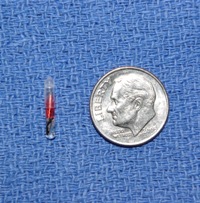
Microchipping is the process of placing a very small identification chip in between the shoulder blades of your Havanese puppy. The procedure is quick, lasting only a few seconds, and is very similar to giving a vaccination.  Your puppy’s microchip number is then registered in a national database showing you as the owner.

Havanese puppy dog microchip

Microchip placed next to a dime.

Most vets and all animal control shelters carry microchip scanners and it is standard protocol for animal control shelters to scan each animal that is recovered to see if it has been microchipped.

microchip scanner

Microchip scanner

Here are three reasons to consider having your Havanese puppy microchipped.

1. It is a permanent means of identification.

ID tags can get lost, chewed off, or may be deliberately removed if your dog is stolen.  Getting your puppy tattooed is a permanent ID option but it is much more complicated and expensive than microchipping.  A microchip is permanent, easy, and inexpensive, and it can not be removed without surgery.

2. It proves that you own your dog.

Havanese dogs are highly desirable and are extremely sweet to boot. If someone finds your Havanese and there is a dispute over who is the rightful owner, a microchip registration will settle it. There are also numerous cases of stolen pets being returned to their rightful owners, even years later, because the owner had microchipped their pet and a vet or animal control center ran a microchip scan.

3. It drastically improves the chances of recovering your Havanese should you become separated.

Without a proper identification only 10% of lost animals are recovered by their owners.  Microchipping your Havanese will greatly improve your chances of recovery should you and your dog become separated.  It also provides peace of mind knowing that if someone scans your dog you will be contacted.

Here at KASE Havanese we recommend that you register your microchip information in the national database, at your local animal control shelter (they will check the national database but registering with them may help streamline the process), and at your local vet. We also recommend using an additional collar ID tag with your phone number so that if someone finds your Havanese they can call you to return it.


How To Trim Havanese Toenails

Trimming your Havanese dog’s toenails can be an intimidating notion.  I have talked with numerous people who have their vet trim their dog’s nails for them just to make sure it is done right.

The good news is that trimming your Havanese dog’s toe nails is as simple as trimming your own.  Once you learn where to make the cut, the process is quick and simple and works for Havanese puppies and adults.

For Havanese puppies and smaller adults regular fingernail or toenail clippers will work just fine.  For larger nails you may prefer to purchase a set of toenail clippers online or from your local pet supply store.

Havanese have four toenails on the rear paws and five on the front.  The fifth nail is the dewclaw and is located on the side of the paw at the “wrist” area.

Havanese dog dewclaw picture

 Dewclaw found on the front foot

There are both translucent and black color toenails.  Knowing where to make the cut on a translucent toenail is simple.  The pink quick is visible to the naked eye.

Havanese dog toenail clear or translucent

Translucent toenail with pink quick visible

To trim the nail make a cut perpendicular to the toe nail about 2 millimeters above the quick and you’re done.  It’s really that simple.  As long as you don’t cut into the pink area you will not cause bleeding or discomfort to your dog.

Trimming a Havanese dog toenail

Make a cut perpendicular to the toenail 2mm away from the pink quick.

Havanese trimmed toenails

Finished toenails

Black toenails are a little more tricky.  The pink quick is not visible so it is easier to accidentally cut too close.

Black Havanese dog toenail

Black toenail with no pink quick visible

The easiest way to trim black toe nails is to “tip” the nails by making small perpendicular cuts starting at the tip of the nail and gradually working in until you reach your comfort level.  You might not get as close a cut as you would with a translucent nail but “tipping” consistently will still keep your dog’s nail length in check.

Havanese tipped toenail

 “Tipped” toenail

If you want a closer trim on black nails you must try to identify the edge of the quick as you are trimming the nail closer.  As you approach the quick you will notice a homogeneous grey to pink oval area appearing toward the middle to top of the nail.  Once you see this, stop.  Any further cutting will cut into the quick and cause bleeding and discomfort.

Havanese toenail cuticle

Very small grey to pink oval area

This area is more difficult to see on small dogs like the Havanese and there may be a bit of a learning curve to this method.

Many people are concerned about cutting the nail too close and hurting their dog.  The best way not to do this is to go slowly, take off just a little bit at the time, and stop when you reach your comfort threshold.

If you do happen to trim just a tad too close and bleeding occurs don’t panic.  You’re dog will be fine.  Dip the bleeding nail into styptic powder or press into a styptic pencil to stop the bleeding.  The nail should heal up nicely.

Havanese styptic powder

 Use styptic powder or pencil to stop any bleeding

Feeding Havanese Raw Liver

Can I feed raw liver to my Havanese?

Well, it turns out that raw, grass-fed liver may very well be one of the most nutrient dense super-foods available for K-9 consumption.

Feeding Havanese Dogs Raw Liver

Liver contains lots of extremely high quality protein as well as a plethora of nutrients including large amounts of vitamin A. It also contains vitamins C, D, E, K, vitamins B1, B2, B3, B5, that hard-to-find B12, biotin, omega-3 and omega-6 fatty acids, and is a tremendous source of iron as well as zink, selenium, and manganese.  If consumed raw the liver also has active digestive enzymes which aid in food digestion and absorption.

These nutrients are important for almost all functions in the dog’s body including maintaining a strong immune system and proper brain and heart function.  Havanese Dog breeders may consider liver as a supplement for its positive effects on the K-9 reproductive system and blood hemoglobin.

So what about the Havanese? Isn’t it a domesticated dog that requires kibble or canned food?  Won’t raw meat mess digestion up?

My experience with Havanese has answered that question with both a yes and no.  The Havanese is a domesticated dog that can have a sensitive stomach.  Table scraps and unfamiliar foods can be dangerous causing vomiting and diarrhea leading to dehydration and sometimes aspiration.  I have personally known Havanese that have died from eating too much of the wrong thing from the table.

That being said, Havanese are still dogs just like wolves, foxes, and coyotes and are capable of eating raw foods as well.  The domesticated Havanese has developed a micro-ecology (friendly micro-organisms that aid in digestion) in the gut that is used to digesting kibble or other processed canned foods.  When introducing too much of a new food in too short a period of time it effectively “shocks” the dogs digestive system with substances that the gut is not used to digesting and the dog’s body rejects the food resulting in vomiting and diarrhea.

When introducing raw, cooked, or dehydrated liver to your Havanese it is wise to start very slowly with a very small chunk about the size of a dime. If your dog does well then very slowly increase the portion over a period of a few weeks to the desired amount.  Make sure to monitor for any vomiting or loose stools.  If you encounter any, take a break for a day or two and try again later after the dog’s system has normalized. Going slow allows the dog’s gut micro-organisms time to evolve and adapt to digesting the new food.

What kind of liver should I get and where do I get it?

Something to take into account when feeding raw foods of any kind to your dog is the source and the quality.  Beef liver that is from a cow fed with genetically modified corn and soy and kept in confinement housing will have a very different nutritional profile than one that is grass-fed with plenty of room to roam.

Whenever possible we try to purchase our organ meats from local farmers who raise grass-fed cows or sheep.  Pastured chicken livers are also an excellent choice.  Not only is grass-fed liver much more nutritious, it also has considerably fewer toxins, and is usually much cleaner, not having the high levels of harmful bacteria that have been associated with raw meat scares.

If raw liver makes you a bit squeamish then cooked or dehydrated liver is a close second-best.  You will still want to check your source on all products to make sure it is from grass-fed or pastured animals.

How much liver should I feed to my Havanese?

The general consensus is that liver can comprise up to 5% of the dog’s diet.  I give a few small chunks a day to each of my dogs. Because liver is so high in vitamin A there is some concern that dogs may get too much.  The fear is that over a period of time, too much accumulating vitamin A may result in vitamin A toxicity.  Sticking to the 5% rule should eliminate this concern.

Quality Havanese Puppies in Charlotte North Carolina